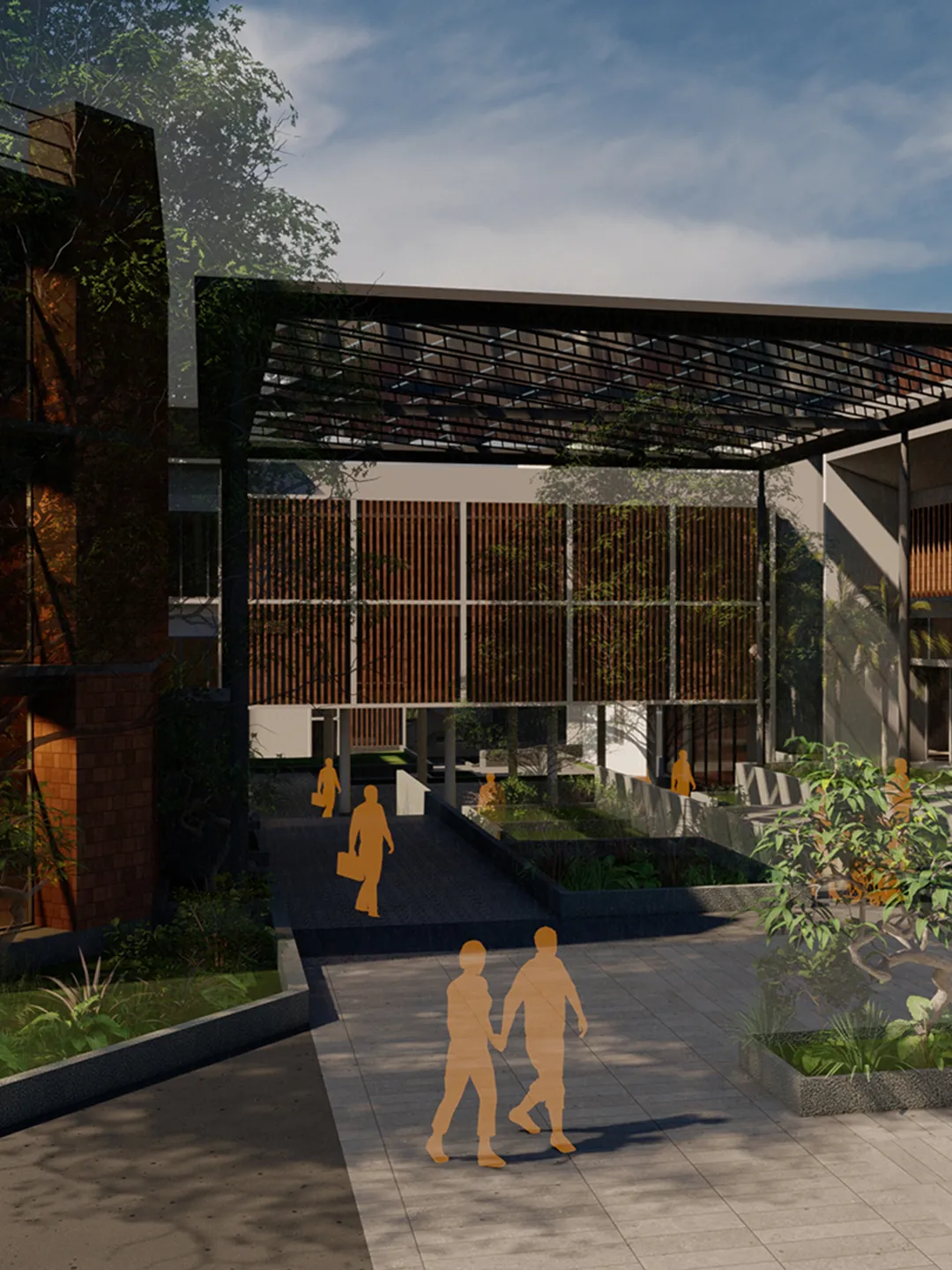
ANERT Campus
Set within a site of existing trees, the campus is planned around them. Buildings form courtyards that step with the slope. Corridors connect shaded spaces. Design focuses on daylight, breeze, and ventilation. Shade and landscape shape a comfortable, low-energy campus.
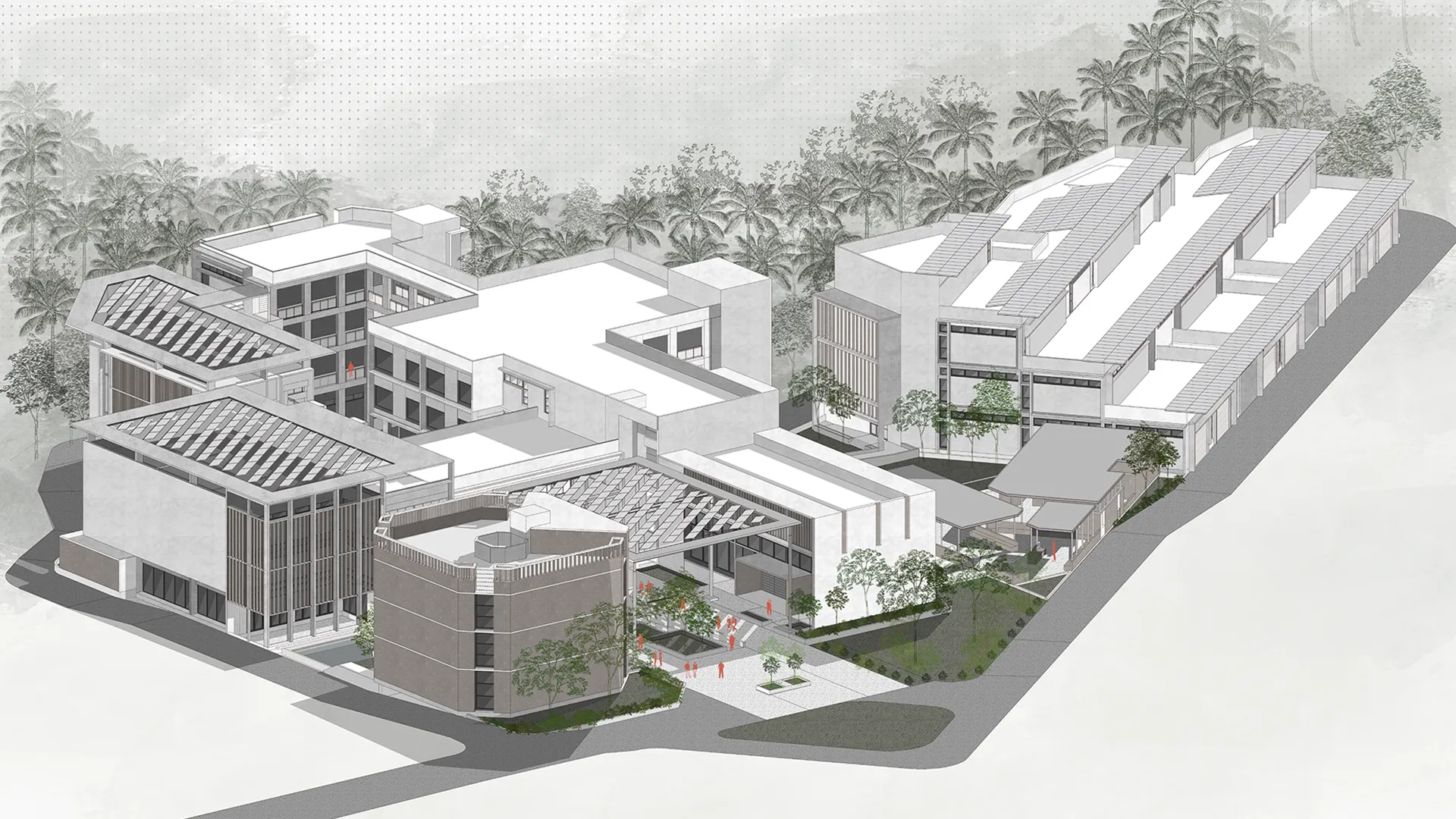


The campus uses passive design to reduce energy use. Buildings are oriented to catch wind and control sun. Water is managed on site. Materials and form help maintain thermal comfort. Renewable energy systems support daily needs, moving the campus towards net-zero performance.
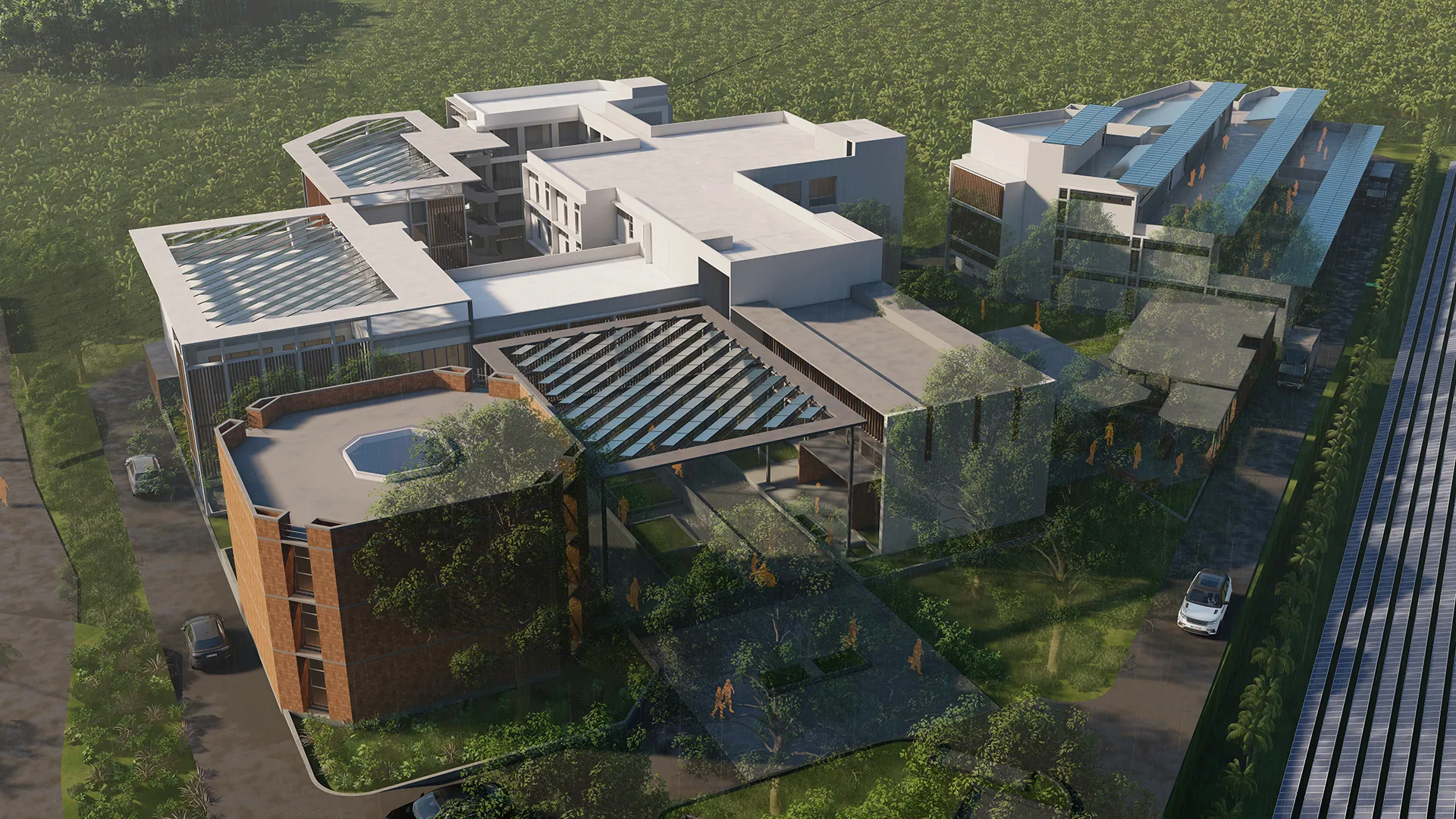
A campus shaped by climate, landscape, and energy—designed to give back more than it uses.
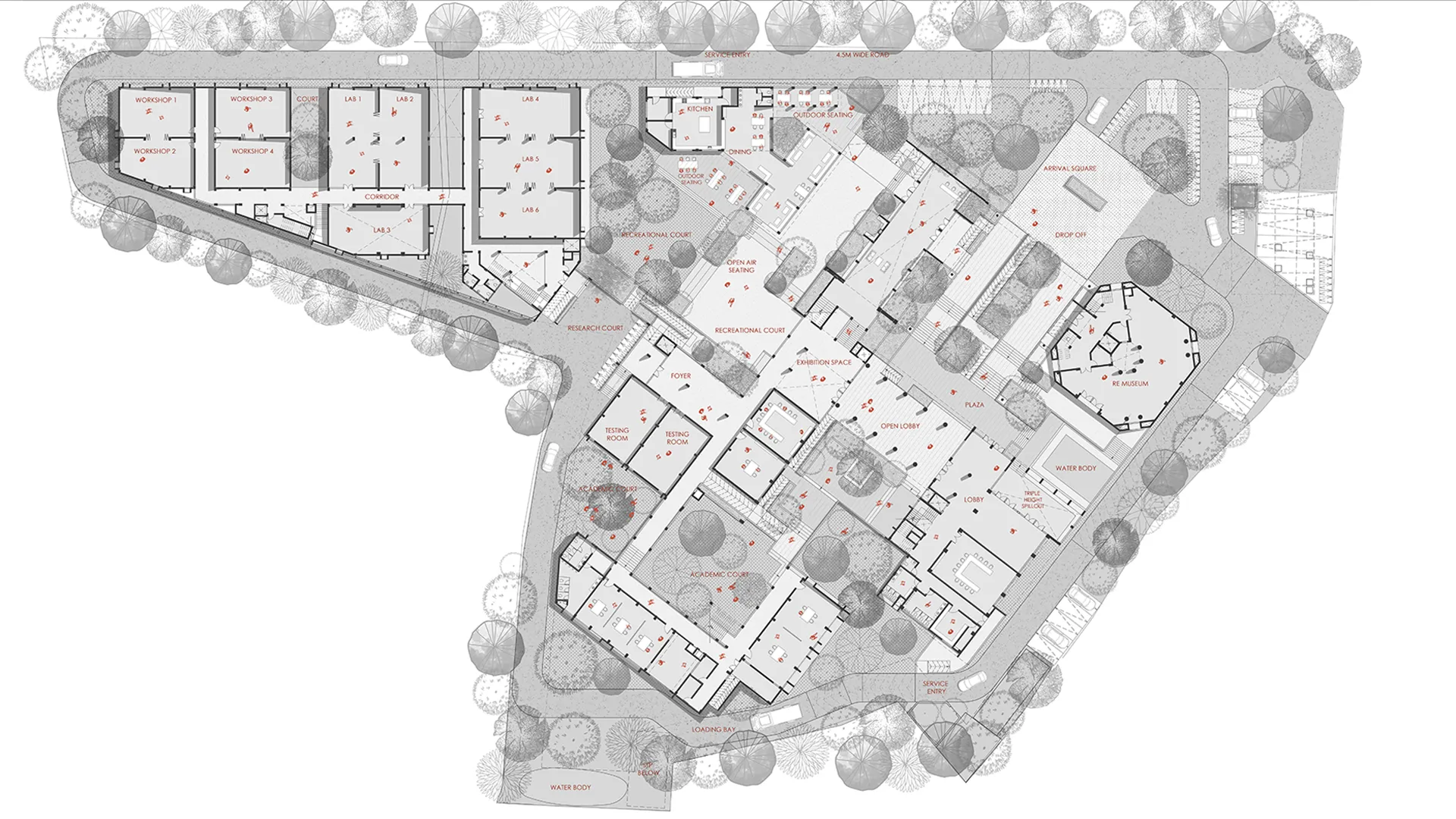
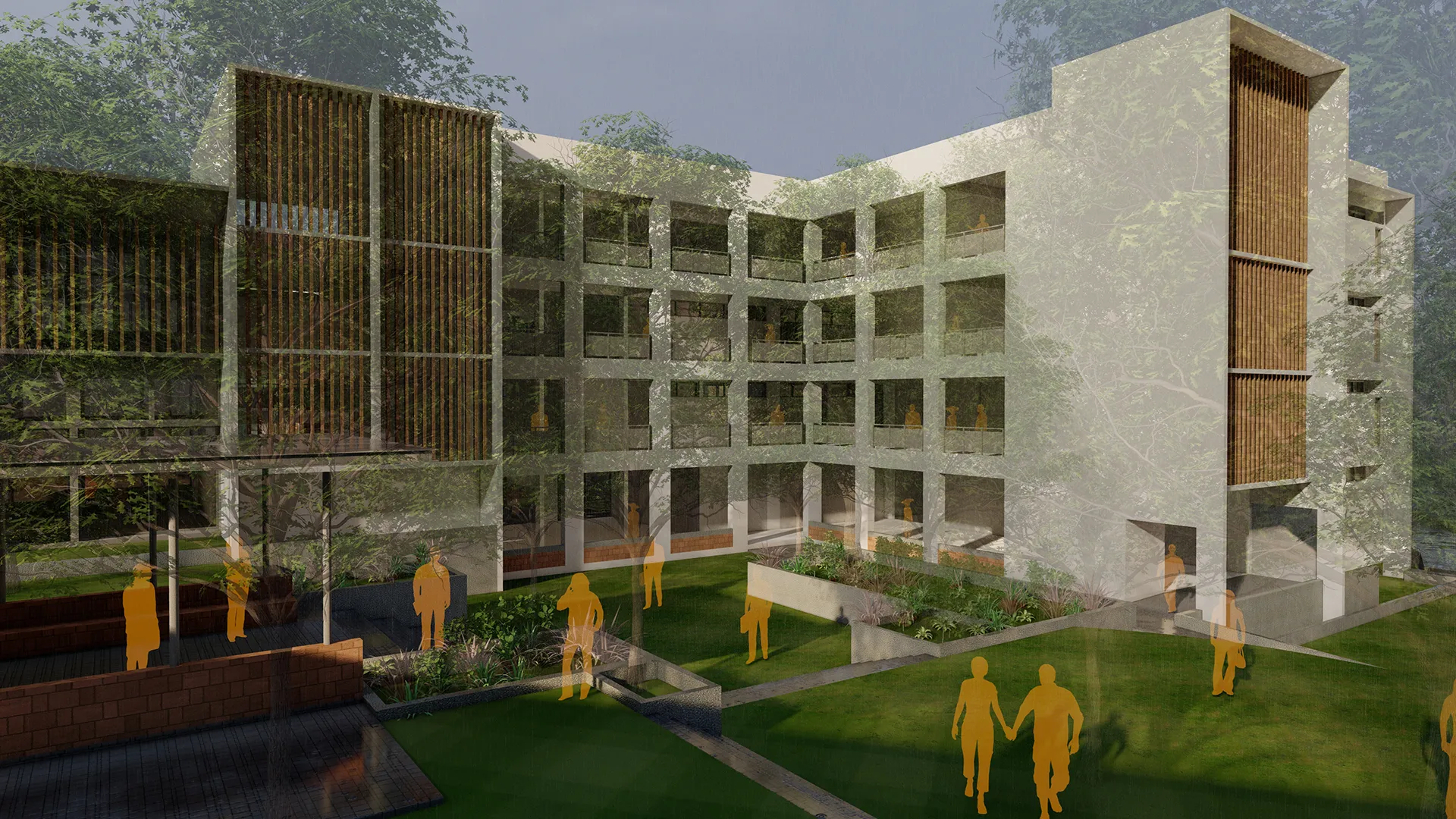


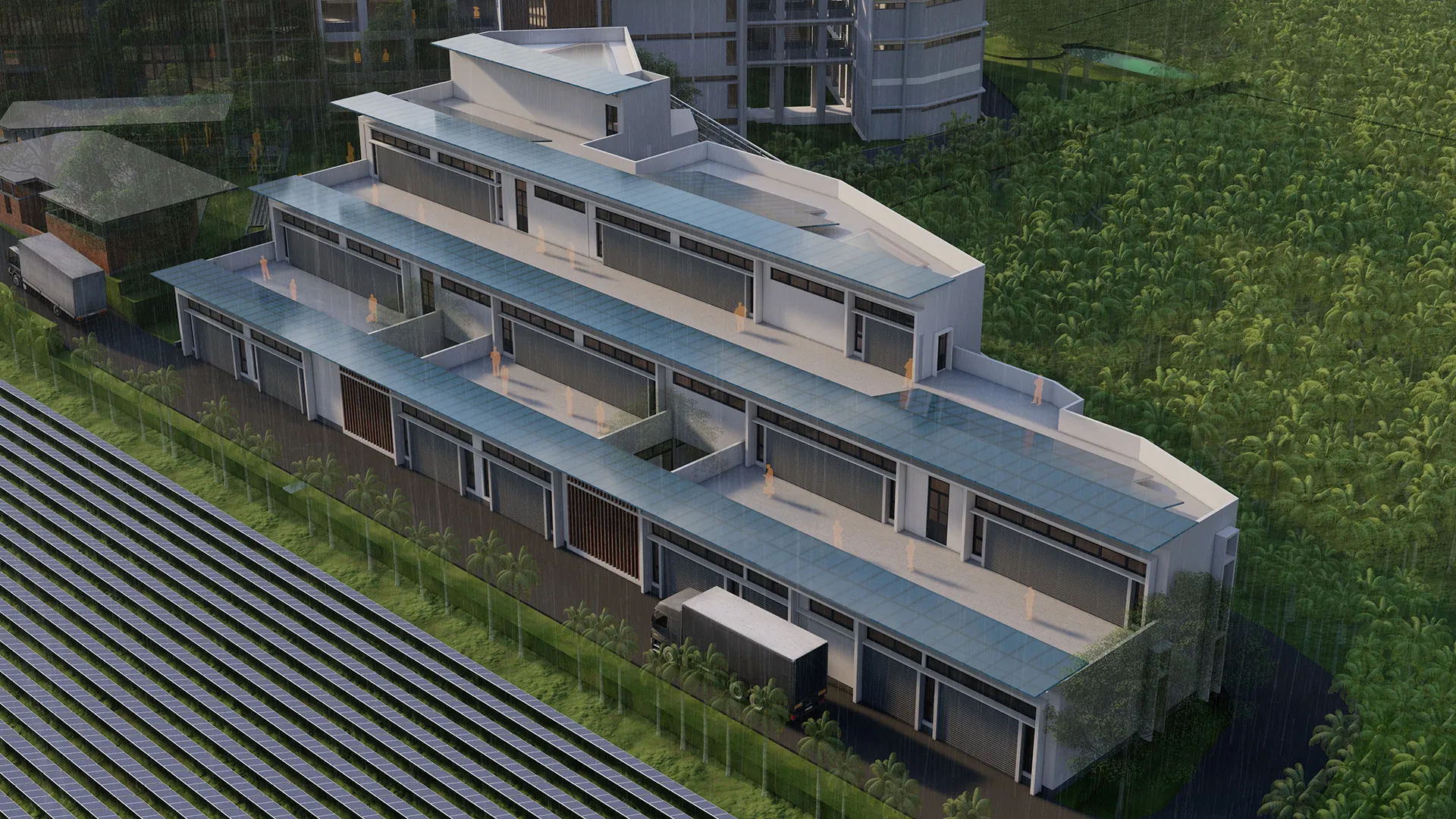

The design responds closely to climate, topography, and the existing trees. Buildings sit lightly on the land, allowing natural ground flow and preserving ecology. Orientation is key. Openings align with prevailing winds, while roofs are planned for solar energy. Water is directed to lower levels for collection and treatment. Daylight and shade studies shape the building form, reducing heat gain and improving comfort. Materials such as laterite, CSEB, cavity walls, and insulated roofs help maintain stable indoor temperatures. Passive strategies like shading and cross ventilation reduce energy demand, while renewable systems support a net-zero campus.